What Age Should My Child Start Preschool? A Guide for Lynbrook & Valley Stream Parents
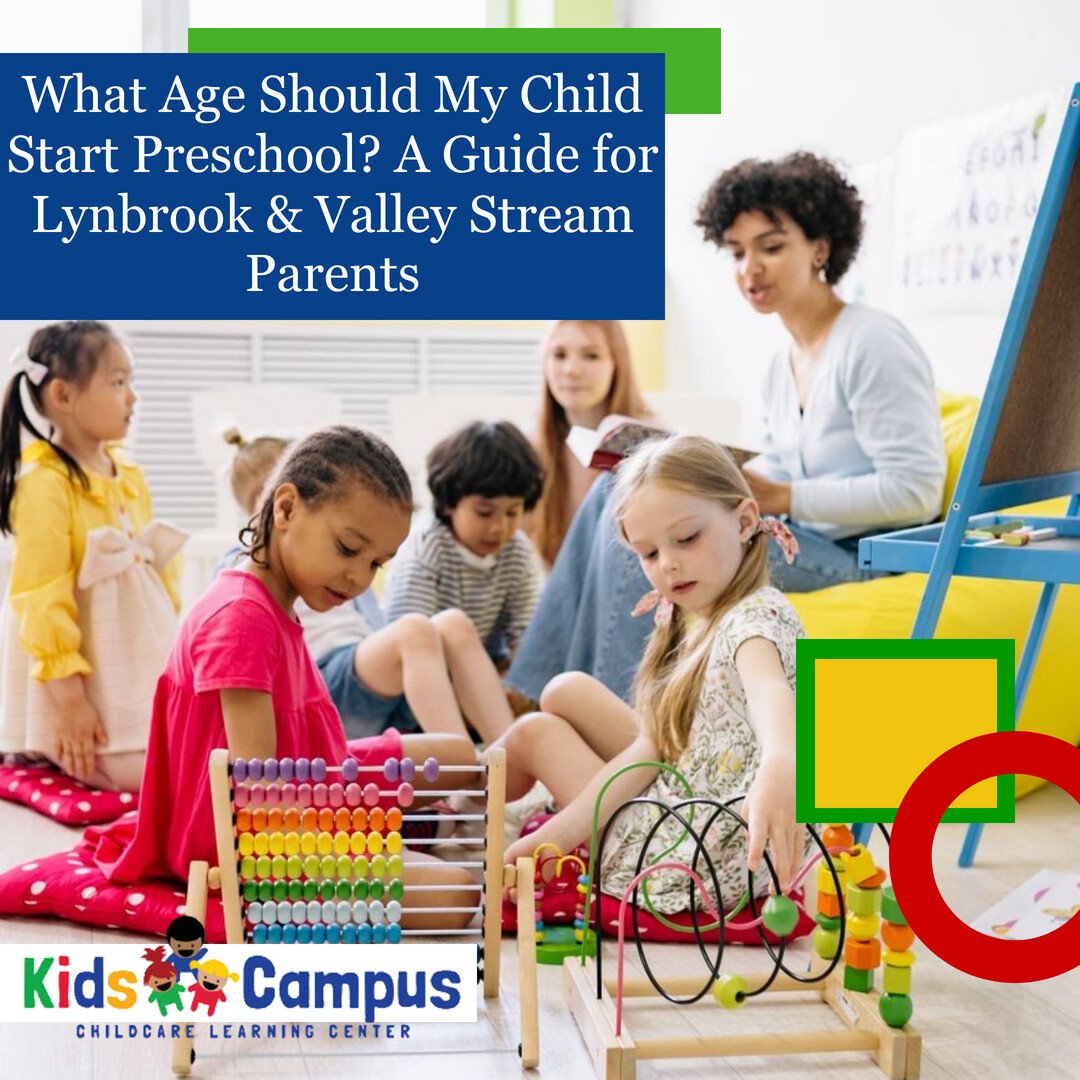
Deciding when your child should start preschool is an important milestone for many families. Some children seem eager to join a classroom environment at an early age, while others may need more time before they feel comfortable separating from a parent or participating in a structured daily routine.
So, what age should a child start preschool?
For many children, preschool begins between the ages of 3 and 5, but there is no single age that is right for every child. Readiness depends on a combination of age, development, personality, independence, social skills, and your family's childcare needs.
For parents searching for preschool in Lynbrook, Valley Stream, or surrounding Long Island communities, understanding the signs of preschool readiness can make the decision much easier.
What Is the Typical Age to Start Preschool?
Many preschool programs serve children between approximately 3 and 5 years old, although early childhood centers may offer programs beginning at younger ages.
Some children enter a preschool-style learning environment around age 2 or 3, while others begin closer to age 4.
Rather than focusing only on a child's birthday, parents should consider whether the program is developmentally appropriate for their child's current stage.
A quality early learning environment should adapt activities, routines, expectations, and teaching methods to the children's ages and abilities.
At Kids Campus, children can progress through age-appropriate early childhood programs as they grow, allowing families to choose care that matches their child's developmental needs.
How Do I Know If My Child Is Ready for Preschool?
Preschool readiness isn't determined by whether your child can already read, write, or count.
In fact, many of the skills children need for kindergarten are developed through their preschool experiences.
Instead, parents can look for several developmental signs that may indicate their child is becoming ready for a classroom environment.
Your Child Is Becoming More Independent
Preschool-age children are gradually learning to complete simple tasks on their own.
Your child may begin wanting to:
Choose their own toys or activities
Put away belongings
Wash their hands with assistance
Feed themselves
Follow simple directions
Attempt tasks before asking for help
Children do not need to be completely independent before starting preschool. Teachers help children continue developing these skills throughout the school day.
Your Child Is Interested in Other Children
Social development is an important part of preschool.
Before starting, your child may show increasing interest in playing near or with other children. They may begin participating in simple games, sharing toys occasionally, copying what other children are doing, or talking about wanting friends.
Your child doesn't need to be highly outgoing.
Some children naturally take longer to become comfortable in group environments. Preschool can actually help quieter children gradually build confidence and develop social skills at their own pace.
Your Child Can Follow Simple Instructions
Preschool classrooms involve routines and transitions throughout the day.
Children may be asked to put away toys, sit for a short story, wash their hands before eating, line up for outdoor play, or move from one activity to another.
A child who can understand and follow simple one- or two-step instructions may be ready to begin adapting to a preschool routine.
Teachers understand that young children are still developing these abilities and will need reminders and guidance.
Your Child Can Communicate Basic Needs
Children entering preschool benefit from being able to communicate some of their basic needs.
That doesn't mean they need advanced language skills.
Children may communicate verbally, through gestures, or with other developmentally appropriate methods.
Being able to indicate that they are hungry, thirsty, tired, uncomfortable, need help, or need to use the bathroom makes it easier for teachers to respond to their needs.
Does My Child Need to Be Potty Trained Before Preschool?
This is one of the most common questions parents ask when considering preschool.
Potty-training requirements vary by program, classroom, and age group.
Some preschool programs require children to be fully toilet trained, while early childhood centers that serve toddlers and younger preschoolers may provide more flexibility.
Parents should ask about toilet-training expectations while researching programs rather than assuming their child cannot enroll.
It is also helpful to tell teachers where your child currently is in the potty-training process so home and school can provide consistent encouragement.
What If My Child Has Separation Anxiety?
Separation anxiety is common in young children and does not necessarily mean a child isn't ready for preschool.
Even children who are excited about school may become emotional when a parent leaves.
A new classroom introduces unfamiliar teachers, children, routines, and surroundings. It can take time for a child to understand that their parent will leave and return later.
Parents can help by creating a predictable goodbye routine, speaking positively about school, and avoiding long or uncertain departures.
Consistency is often helpful. As children become familiar with their teachers and daily schedule, many gradually become more comfortable with separation.
Why Daily Routines Can Make Preschool Easier
Young children often feel more secure when their days follow a predictable rhythm.
Preschool routines may include:
Morning arrival
Circle time
Learning centers
Teacher-guided activities
Meals and snacks
Outdoor play
Creative activities
Rest or quiet time
Afternoon play
Pickup
Knowing what happens next can help children understand their environment and transition more comfortably between activities.
Parents who want to see how these different parts of the day fit together can explore A Day at Kids Campus: Our Daily Childcare Routine.
Is Age 3 a Good Time to Start Preschool?
For many children, age 3 can be a great time to begin preschool.
At this age, children are often becoming increasingly curious, verbal, independent, and interested in social interaction.
A developmentally appropriate preschool environment can help three-year-olds strengthen:
Communication
Fine and gross motor skills
Social interaction
Emotional regulation
Creativity
Problem-solving
Early literacy
Early math concepts
Independence
However, development varies significantly among children. One three-year-old may eagerly participate in classroom activities while another may need additional support and transition time.
Neither response is unusual.
What About Starting Preschool at Age 4?
Age 4 is another common time to begin or continue preschool.
Four-year-olds are often preparing for the transition to kindergarten, so their classroom experiences may gradually include more opportunities to practice school-readiness skills.
These can include:
Listening during group activities
Recognizing letters and numbers
Developing pencil and scissor control
Following classroom routines
Expressing ideas and needs
Taking turns
Working with classmates
Completing age-appropriate tasks
Becoming more independent
Preschool at this age can provide children with opportunities to practice these skills in a supportive environment before entering kindergarten.
Preschool Readiness Is About More Than Academics
Parents sometimes worry that their child needs to know the alphabet, count to a certain number, or write their name before starting preschool.
Those skills can certainly develop during the preschool years, but readiness involves much more.
Social-emotional skills are equally important.
Children are learning how to:
Separate from caregivers
Participate in a group
Wait briefly for a turn
Express emotions
Solve small conflicts
Ask for help
Follow routines
Develop friendships
Try unfamiliar activities
Recover from frustration
These everyday experiences help create the foundation children will use throughout school.
Daycare or Preschool: Which Does My Child Need?
Parents may also wonder whether their child should attend daycare or preschool.
The answer depends on your child's age, developmental needs, your family's schedule, and the programs available to you.
Some childcare centers provide both daycare and preschool within the same early learning environment. This allows children to transition into more advanced classrooms as they grow without necessarily changing schools.
If you're currently comparing the two options, read our guide Daycare vs. Preschool: Which Is Right for Your Child in Lynbrook or Valley Stream?
Visit the Preschool Before Making Your Decision
One of the best ways to determine whether your child is ready for a particular program is to visit it.
During a preschool tour, watch how teachers interact with children and how children respond to the environment.
Look at the classrooms, learning materials, playgrounds, security procedures, and daily schedule.
Ask questions about:
Teacher experience
Classroom routines
Curriculum
Nap or rest time
Meals and snacks
Potty training
Parent communication
Separation anxiety
Classroom transitions
Safety procedures
You can also use our Daycare Tour Checklist to help you know what to look for during your visit.
Choosing a Preschool in Lynbrook or Valley Stream
Finding the right preschool involves more than choosing the closest location.
Parents should consider whether the environment feels welcoming, whether teachers are attentive, whether activities are developmentally appropriate, and whether their child will have opportunities to learn through both structured activities and play.
Kids Campus provides early childhood learning programs for families in Lynbrook and Valley Stream, New York, with age-appropriate experiences designed to help children develop socially, emotionally, physically, and academically.
Our preschool programs encourage children to explore, communicate, build independence, develop friendships, and strengthen foundational skills while learning in a nurturing environment.
Is Your Child Ready for Preschool?
There is no perfect preschool starting age that applies to every child.
Some children are ready at 3. Others may benefit from beginning earlier in a toddler program or transitioning into preschool later.
The goal is to find a program that meets your child's developmental needs and gives them the support they need to feel safe, confident, and excited about learning.
If you're considering preschool in Lynbrook or Valley Stream, we invite you to visit Kids Campus and learn more about our early childhood programs.
Meet our teachers, explore our classrooms, ask questions about your child's readiness, and see firsthand what a typical day at Kids Campus looks like.
Schedule a tour today and let us help you find the right program for your child's next stage of learning.