The Importance of Outdoor Play in Early Childhood Development
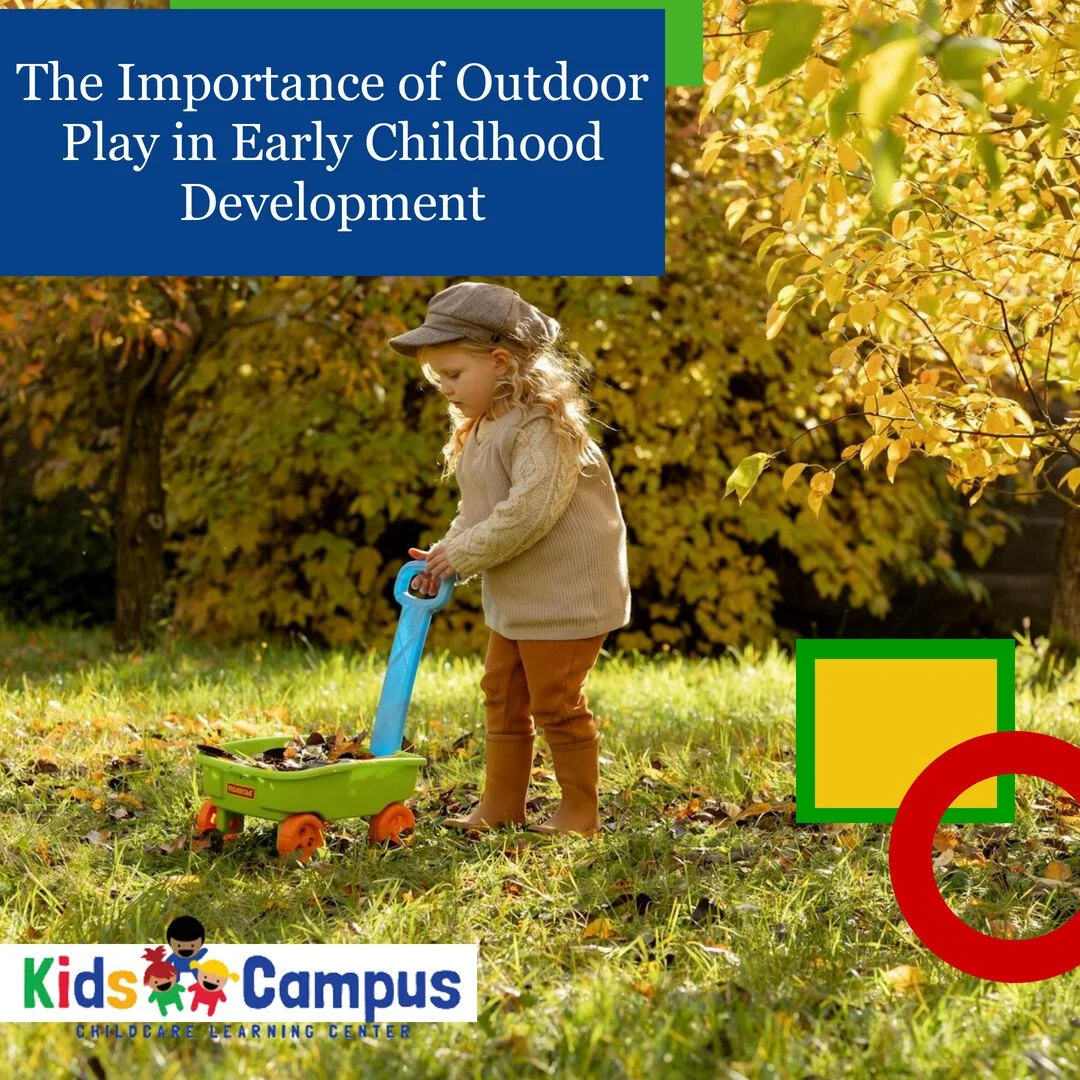
Outdoor play is a vital component of a well-rounded early childhood education. While classroom learning builds foundational academic skills, outdoor experiences give young children the opportunity to explore, move, socialize, and learn in ways that cannot be replicated indoors. Understanding the importance of outdoor play in early childhood development helps parents and educators support healthier, happier, and more engaged learners.
At Kids Campus, an Early Childhood Learning Center serving families in Lynbrook and Valley Stream, NY, outdoor play is thoughtfully integrated into daily routines to support children’s physical, cognitive, social, and emotional growth.
Why Outdoor Play Matters in Early Childhood
Early childhood is a critical period of rapid brain and body development. Outdoor play allows children to interact with their environment in dynamic, hands-on ways that support development across multiple domains.
According to the Centers for Disease Control and Prevention (CDC), regular physical activity in young children improves overall health, supports brain development, and helps establish lifelong healthy habits.
When children engage in outdoor play, they are not just burning energy—they are building essential developmental skills.
Physical Benefits of Outdoor Play
One of the most visible benefits of outdoor play is physical development. Young children need daily opportunities to move their bodies freely.
1. Gross Motor Skill Development
Outdoor environments encourage running, jumping, climbing, and balancing. These activities strengthen muscles, improve coordination, and enhance overall motor control.
2. Healthy Growth and Fitness
Active play helps children maintain a healthy weight, build endurance, and develop cardiovascular strength. Establishing these habits early supports long-term wellness.
3. Improved Sleep and Energy Regulation
Children who spend time outdoors tend to sleep better and regulate their energy more effectively throughout the day, supporting better focus during classroom activities.
Cognitive Development Through Outdoor Play
The importance of outdoor play in early childhood development extends well beyond physical health. Outdoor environments provide rich opportunities for cognitive growth.
1. Encourages Curiosity and Exploration
Nature naturally sparks curiosity. Whether observing insects, watching clouds, or exploring playground equipment, children learn through discovery and experimentation.
2. Strengthens Problem-Solving Skills
Outdoor play often involves challenges—figuring out how to climb safely, navigate space, or build something with natural materials. These moments support critical thinking and decision-making.
3. Enhances Attention and Focus
Research from the American Academy of Pediatrics shows that outdoor play can improve attention spans and reduce stress in young children, making them more ready to learn when they return indoors.
At Kids Campus, outdoor time complements classroom instruction, reinforcing concepts learned indoors through hands-on experiences.
Social and Emotional Benefits of Outdoor Play
Outdoor play also plays a key role in helping children develop strong social and emotional skills.
1. Builds Social Interaction and Cooperation
When children play together outside, they learn to share, take turns, communicate, and resolve conflicts. These experiences help develop empathy and teamwork.
2. Encourages Independence and Confidence
Outdoor environments allow children to test their abilities and make choices independently. Successfully navigating play challenges boosts confidence and self-esteem.
3. Reduces Stress and Supports Emotional Regulation
Fresh air and open spaces provide a calming effect. Outdoor play helps children release energy, manage emotions, and return to learning activities feeling balanced and focused.
Outdoor Play in a Structured Early Learning Environment
High-quality early childhood programs understand that outdoor play is not just “free time”—it is an intentional part of developmentally appropriate learning.
At Kids Campus, outdoor play is:
Supervised and age-appropriate
Integrated into daily schedules
Designed to support both free play and guided activities
Aligned with early learning standards
How Parents Can Support Outdoor Play at Home
Families play an essential role in reinforcing the benefits of outdoor play beyond the school day.
1. Prioritize Daily Outdoor Time
Even short periods of outdoor play—20 to 30 minutes a day—can have meaningful developmental benefits.
2. Encourage Unstructured Play
Not all outdoor time needs to be organized. Allow children to lead their play, make choices, and explore freely.
3. Limit Screen Time
Balancing screen use with active outdoor play helps children develop healthier habits and stronger cognitive skills.
4. Engage Together
Simple activities like walking, playing catch, or exploring nature together strengthen family bonds and model healthy behavior.
The Role of Outdoor Play at Kids Campus
Kids Campus recognizes the critical role outdoor play has in supporting the whole child. By providing safe outdoor spaces and encouraging active exploration, the center helps children develop skills that support academic readiness and lifelong learning.
The school’s philosophy focuses on nurturing children socially, emotionally, physically, and cognitively.
Long-Term Impact of Outdoor Play
Children who regularly engage in outdoor play during early childhood are more likely to:
Develop strong motor and coordination skills
Demonstrate better focus and learning readiness
Build healthy social relationships
Exhibit emotional resilience and confidence
Maintain active lifestyles later in life
The importance of outdoor play in early childhood development cannot be overstated—it supports foundational growth that impacts children well into their school years and beyond.
Conclusion
Outdoor play is an essential pillar of early childhood development. From strengthening physical health to enhancing cognitive, social, and emotional skills, outdoor experiences provide children with opportunities to grow in ways that indoor learning alone cannot achieve.
At Kids Campus, outdoor play is intentionally incorporated into daily learning to ensure children receive a balanced, enriching educational experience. Families in Lynbrook and Valley Stream seeking a nurturing environment that values whole-child development are encouraged to explore what Kids Campus has to offer.